A real-time network metadata observatory for expert engineers.
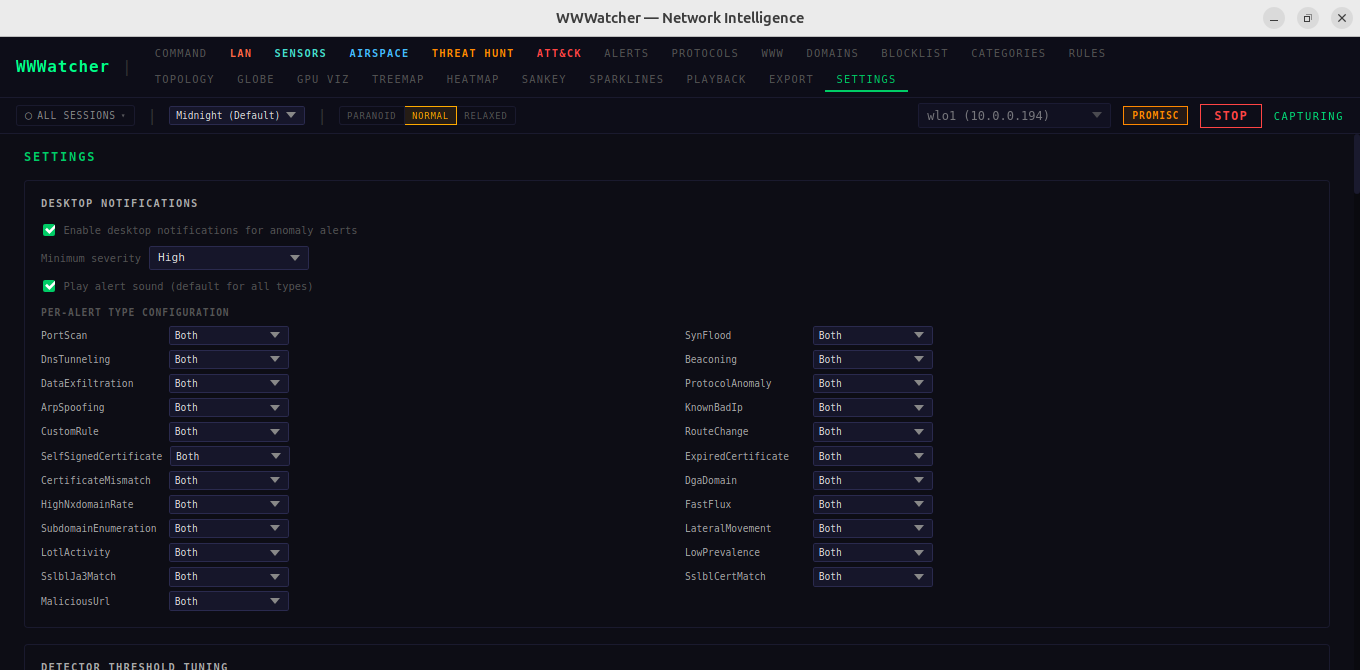
WWWatcher captures packet metadata — not payloads — from every interface on the host, stores it in PostgreSQL with TimescaleDB, and surfaces it through 23 dashboard tabs covering flows, anomalies, MITRE ATT&CK mapping, geo, topology, traceroute, threat hunt, and counter-recon. Built in Rust, shipped as a single Tauri desktop app on Linux, macOS, and Windows. Single-user. Self-hosted. Your data never leaves your machine.
Eight crates · one binary · metadata observatory by design. WWWatcher is what you reach for when an off-the-shelf SIEM is too coarse and a packet sniffer is too noisy.
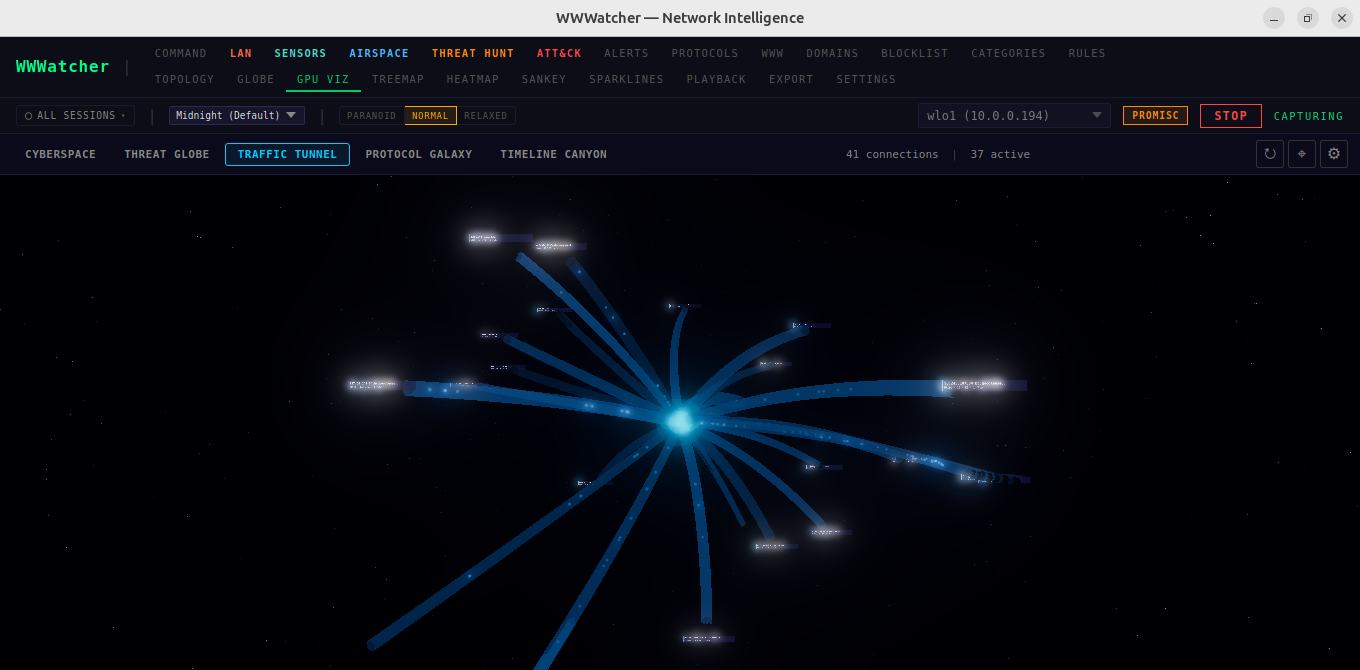
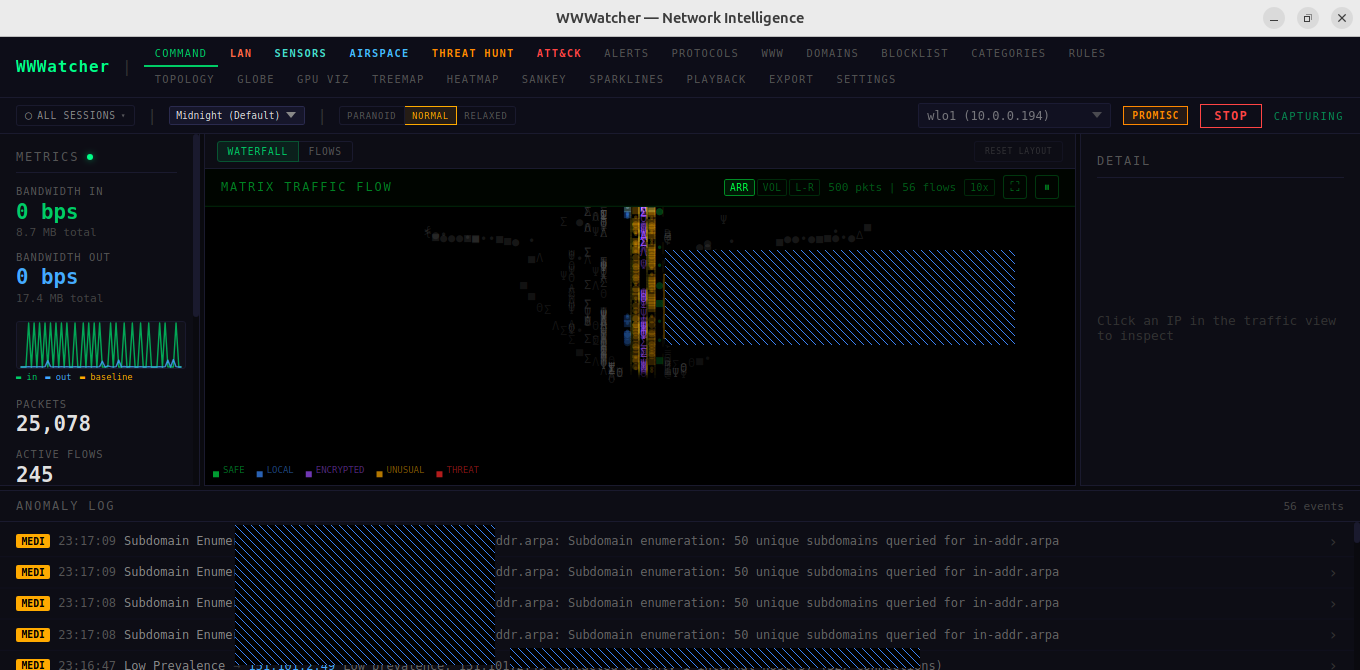
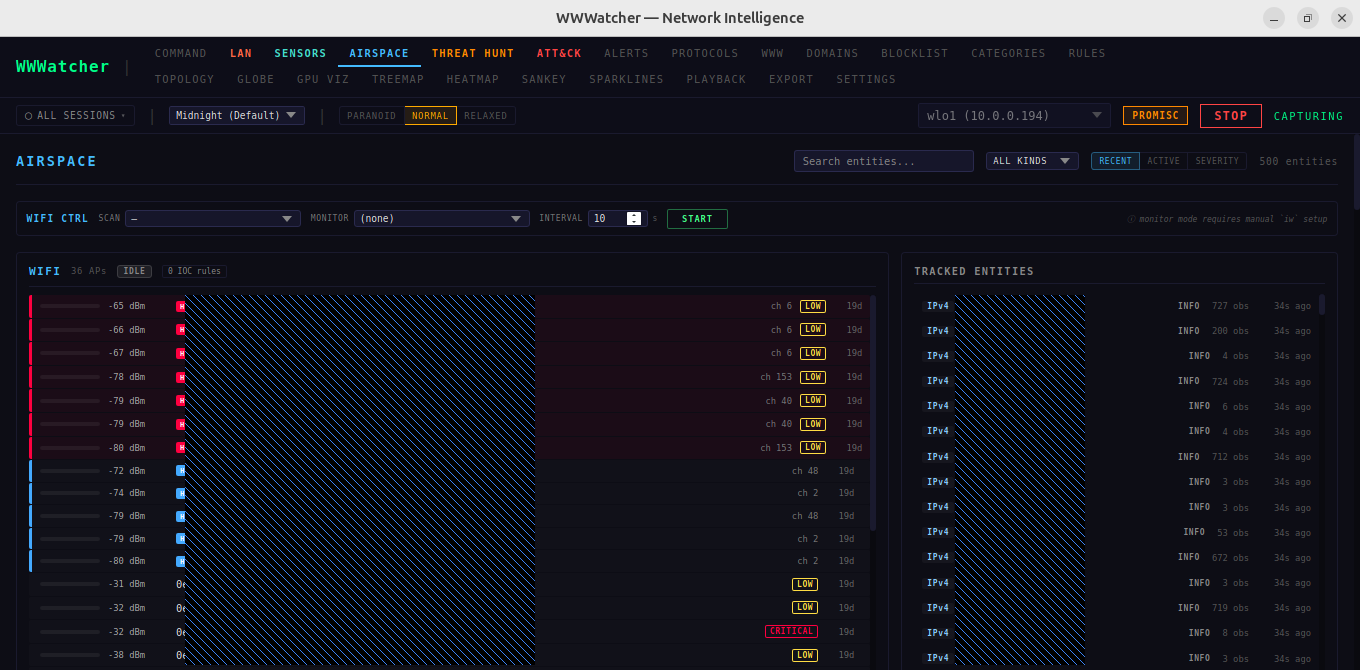
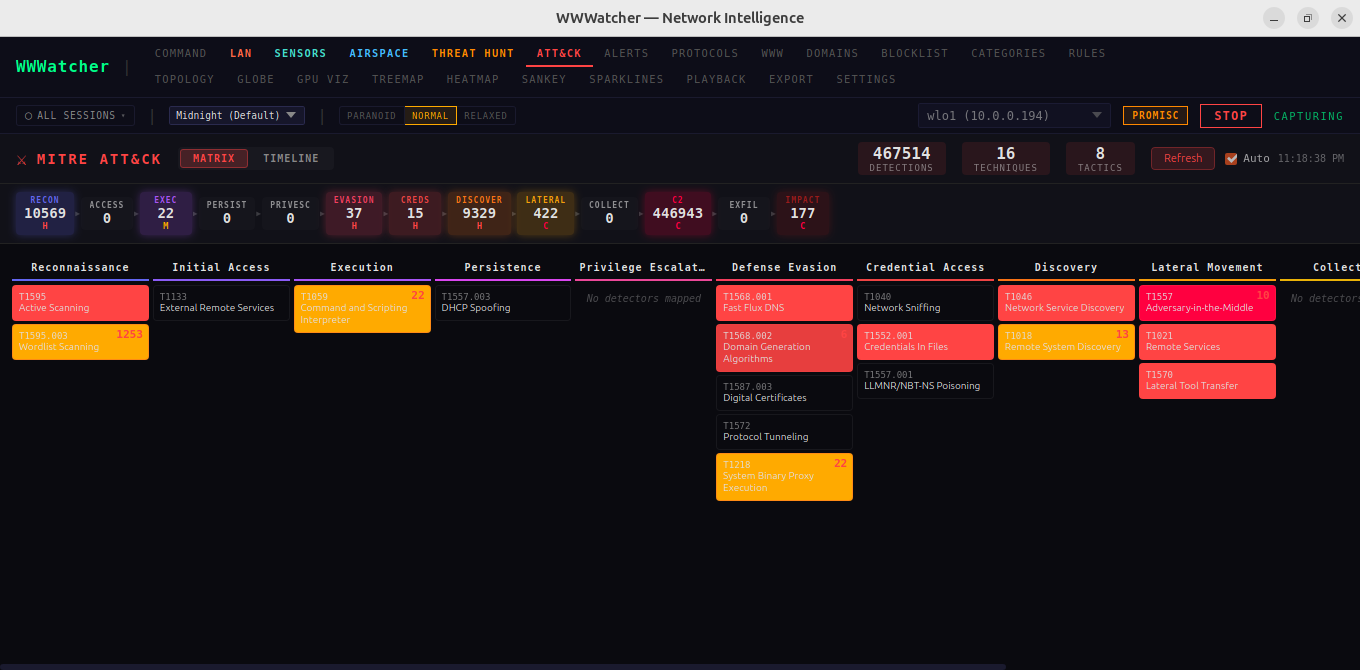
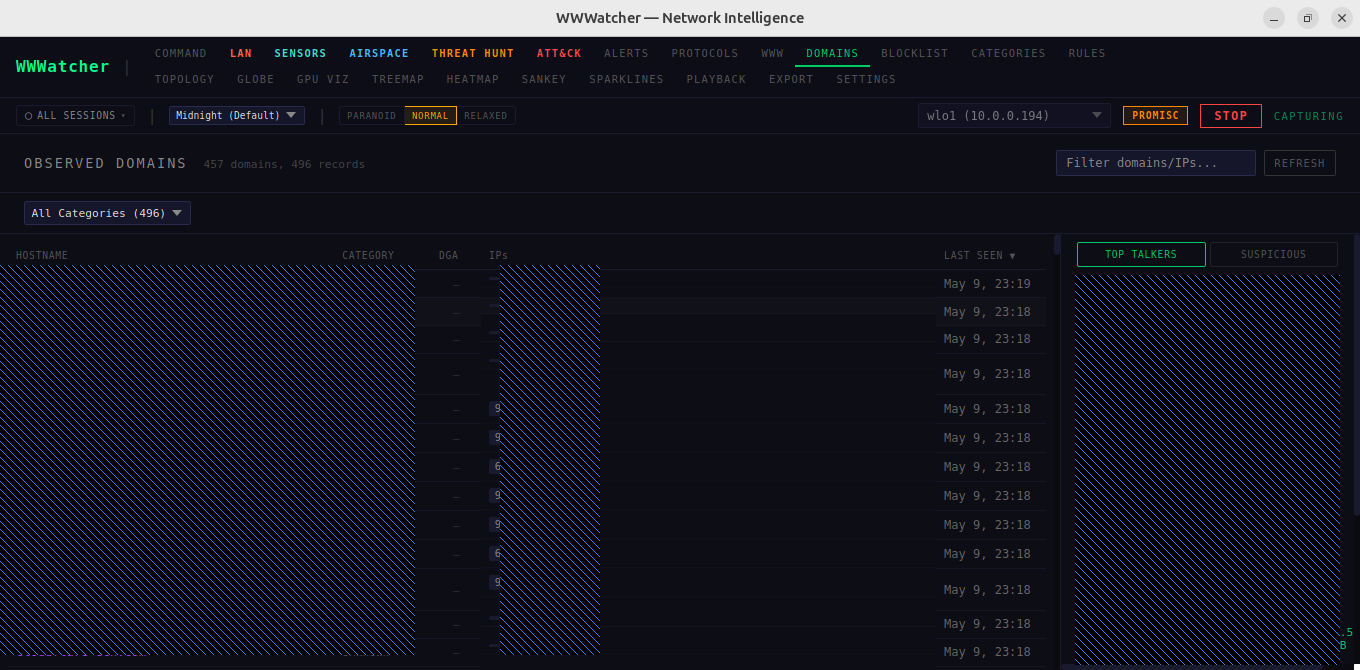
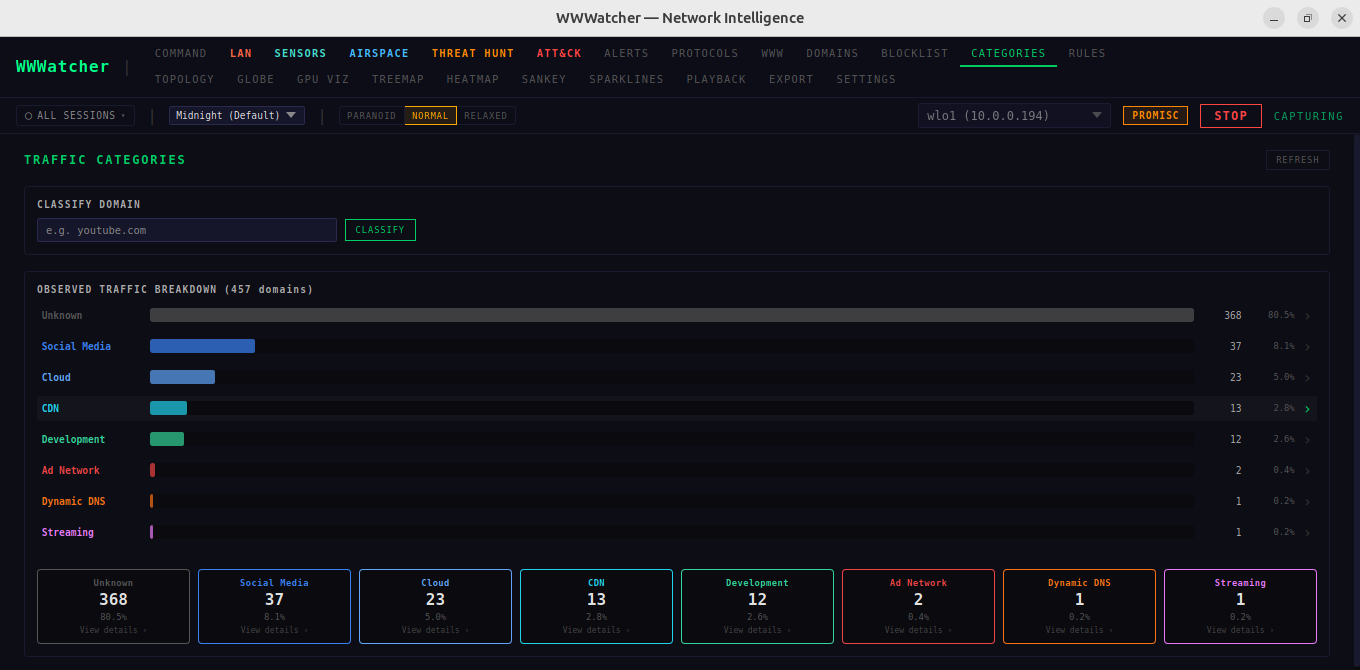
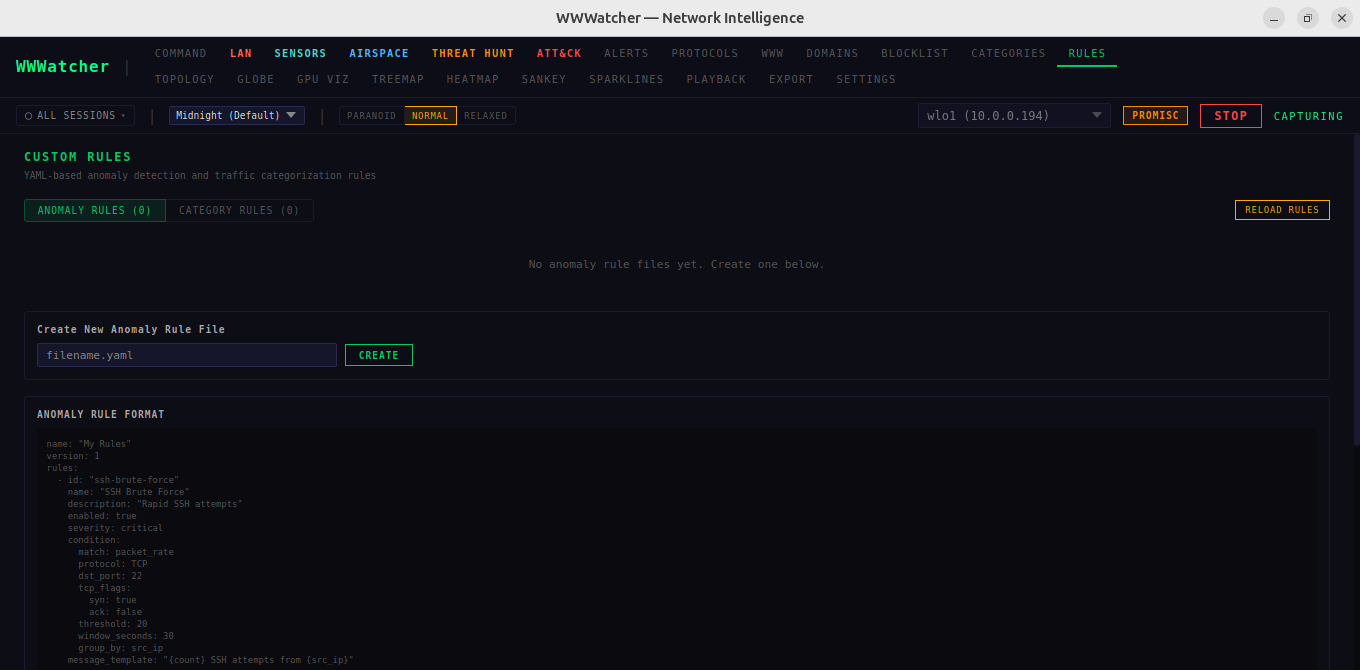
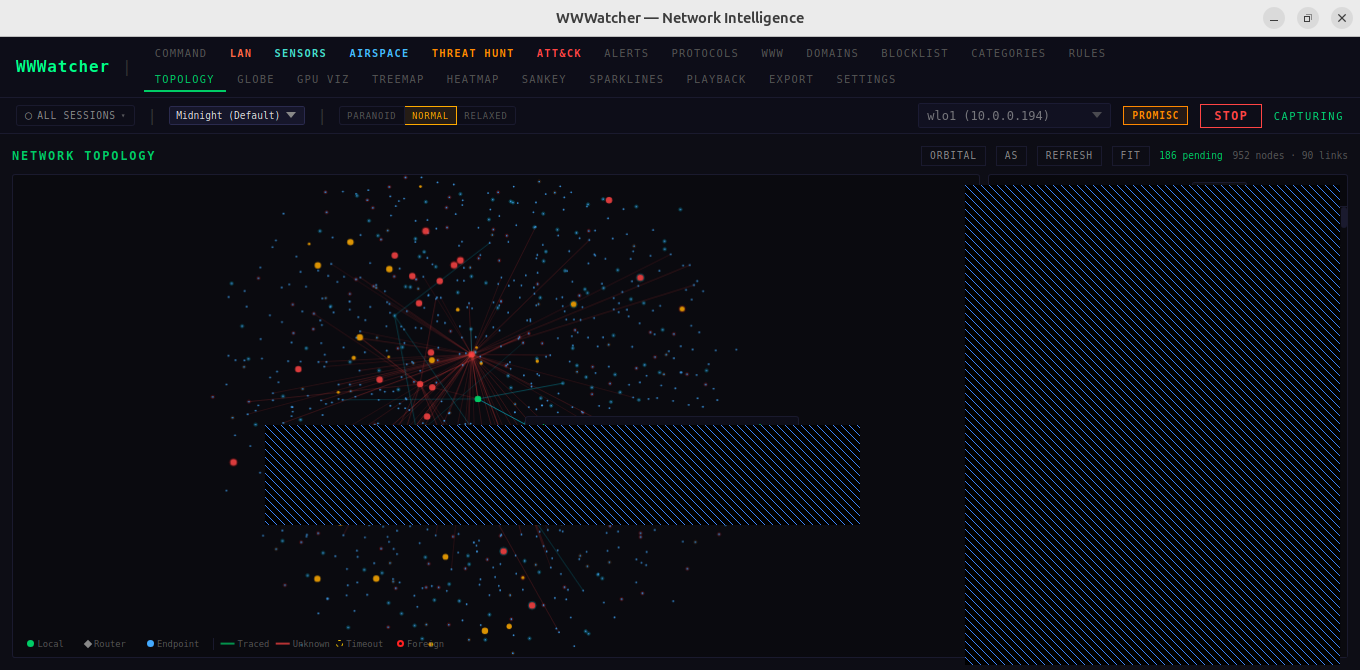
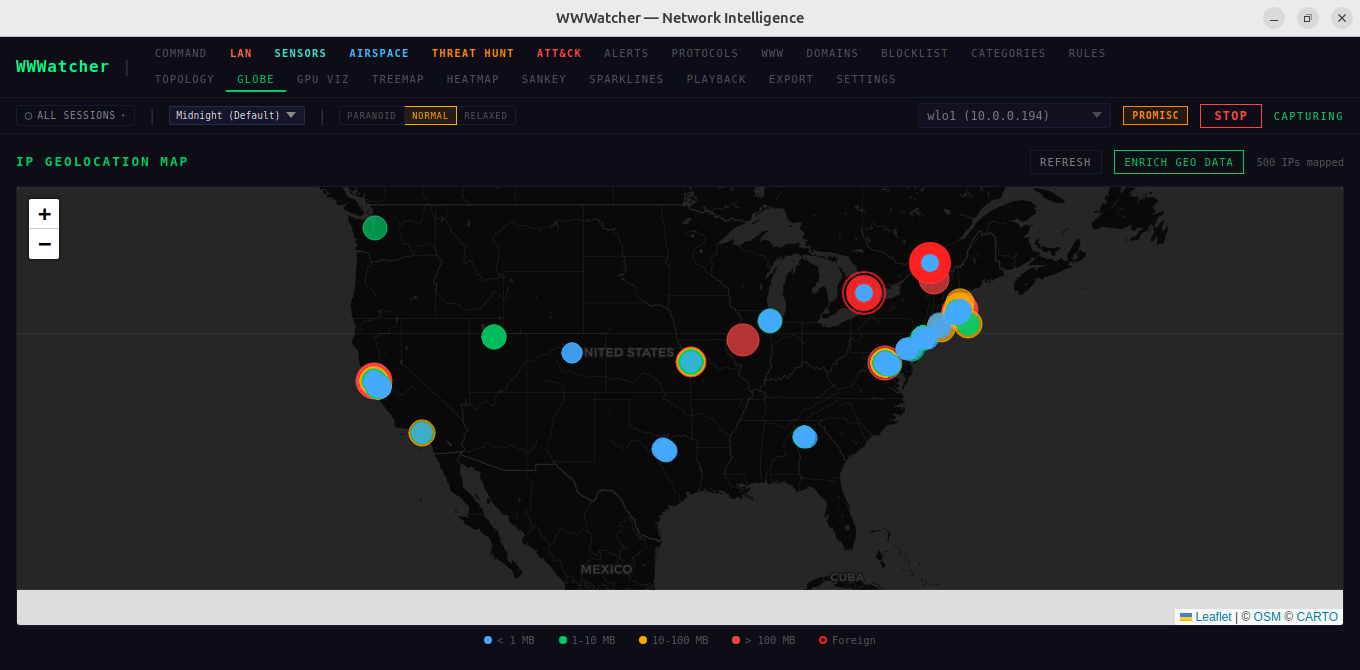
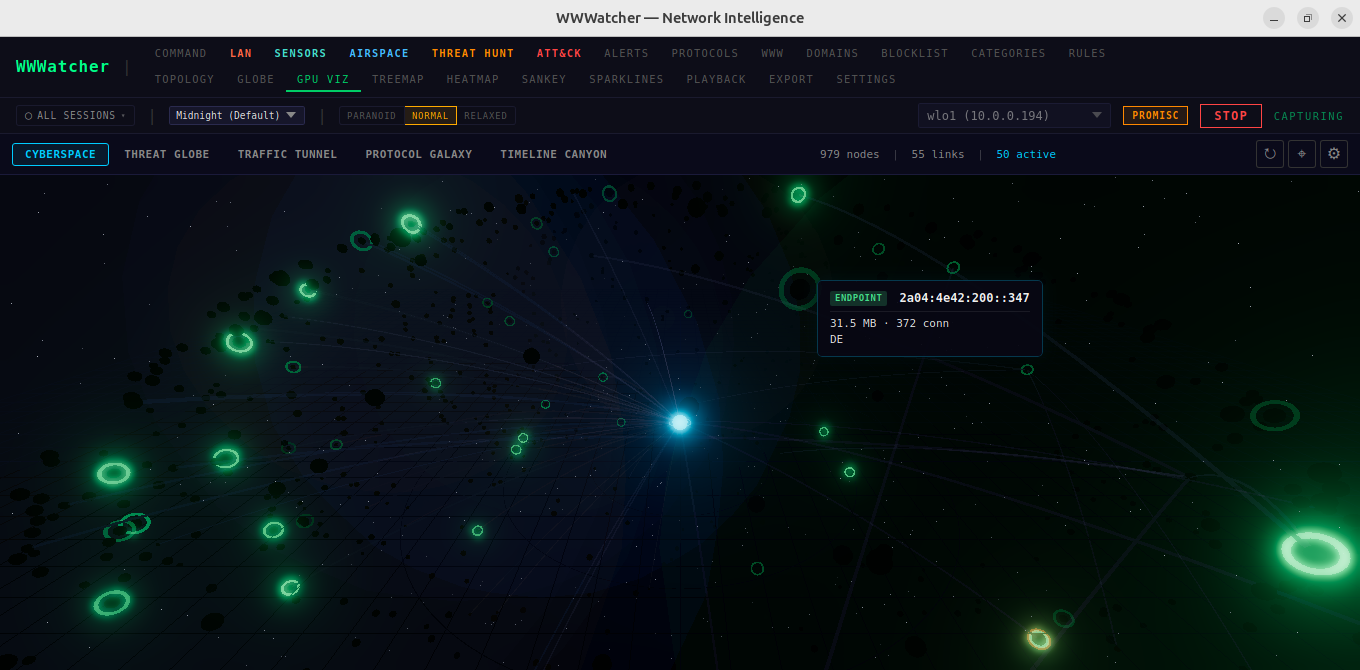
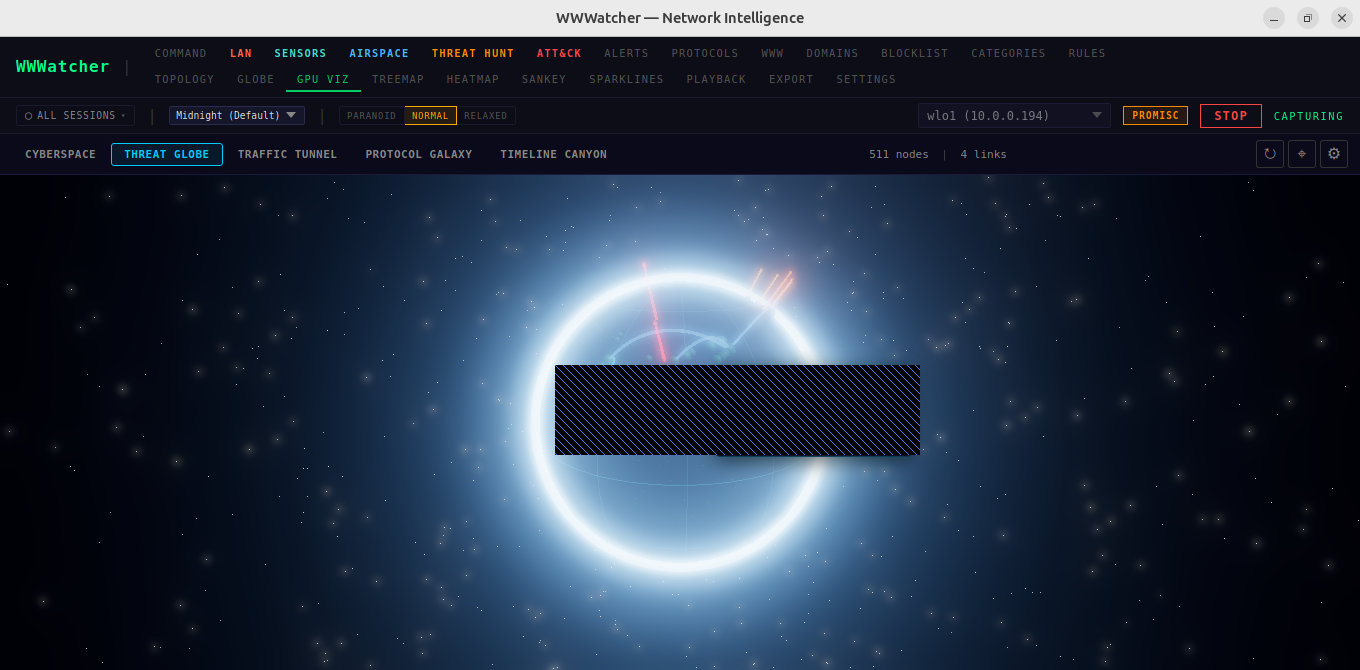
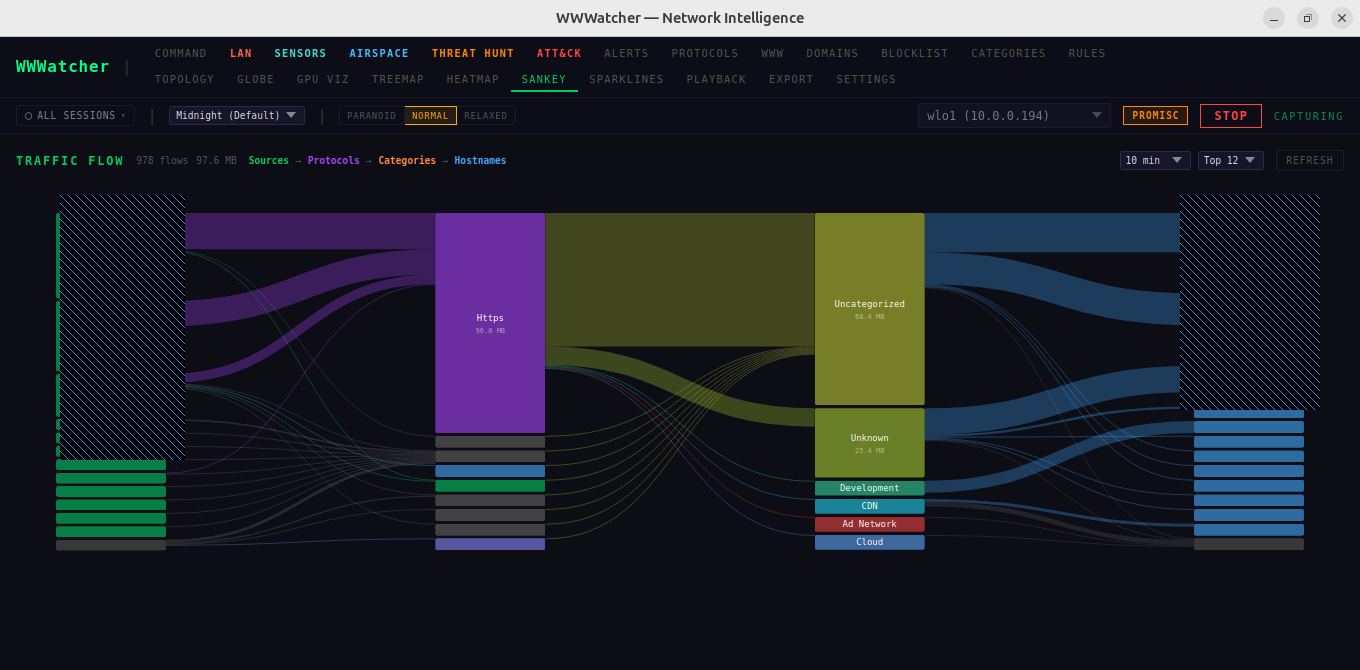
Captured 2026-05-09. The same WWWatcher instance, switched across 13 of its 23 dashboard tabs while the operator's home network was actively under observation.
// PII REDACTED: MAC addresses, public IPs, IPv6 EUI-64 host identifiers, hostnames containing personal identifiers, neighbor SSIDs, and ASN/org strings have been overlaid with diagonal slash bars. RFC1918 local addresses, the application UI itself, and aggregate counters are unredacted.


Background radio environment logger for Android.
RadioLogger runs continuously on rooted Android devices, capturing the full radio picture — GPS, WiFi APs, cell towers, Bluetooth and BLE — into rolling CSV files. The data feeds back into WWWatcher as a remote sensor stream, extending the observatory's coverage from one machine to a fleet.
WWWatcher and RadioLogger are the same engineering muscle that fixes enterprise platform problems — local AI handles eligible workloads at lower cost while the data stays on your infrastructure. Metadata only. Self-hosted. Single-binary. The same instinct for "observe-and-track everything, surface what matters" scales from a phone in a backpack to a Fortune 500 platform.
← SEE THE CONSULTING PRACTICE